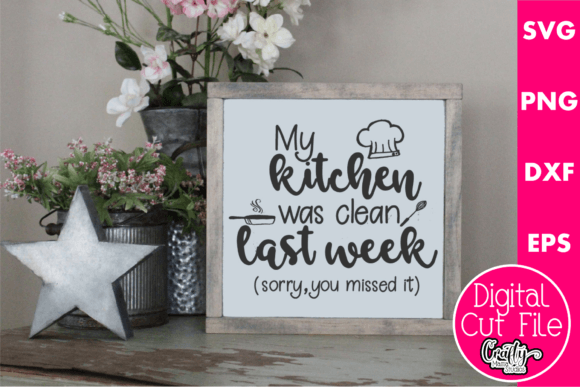
My Kitchen Was Clean Last Week Sorry Review
As a designer who has spent years translating digital files into tangible stitched goods, I approach every new asset with a critical eye. The market is flooded with generic Graphics, but finding a design that balances humor with technical execution is rare. When I first opened the file for My Kitchen Was Clean Last Week Sorry, I was immediately struck by its candid charm. It is not just another kitchen quote; it is a statement piece that speaks directly to the chaotic reality of modern life. For any Etsy seller or small business owner looking to inject personality into their crafts catalog, this design offers a unique opportunity to connect with customers on a human level.
The Visual Impact and Design Personality
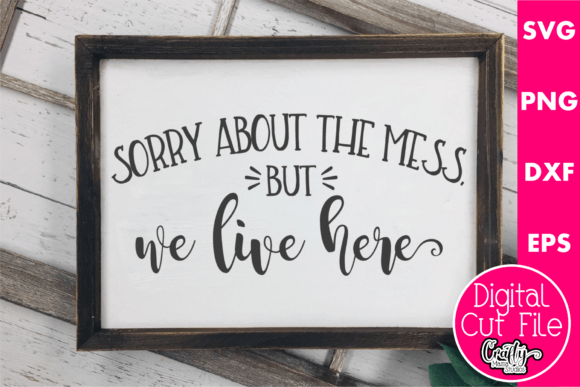
The first impression of My Kitchen Was Clean Last Week Sorry is one of relatable honesty. Unlike stiff, formal typography often found in home decor, this design feels conversational. The layout suggests a playful energy that works exceptionally well for custom apparel. When visualizing this as an embroidery project, I see the text wrapping naturally around the chest area of a sweatshirt or centered boldly on a canvas tote bag. The phrase itself creates an immediate emotional hook; it invites a chuckle from anyone who knows the struggle of keeping a home tidy.
From a technical standpoint, the shape and flow of the lettering appear robust enough to handle standard fill stitch patterns without becoming muddy. However, the success of the final finished product will depend heavily on how the machine embroidery design is digitized. If the file includes intricate serifs or tight kerning, we must be cautious about stitch density. High density can cause puckering on lighter fabrics, while low density might leave gaps that compromise the professional look of the handmade product.
Real-World Application: The Apron Scenario
To truly understand the potential of this asset, let us walk through a real-life scenario. Imagine you are preparing a batch of personalized aprons for a holiday gift collection. You select a sturdy, off-white cotton duck fabric. As you hoop the material, you consider where to place My Kitchen Was Clean Last Week Sorry. Centered on the bib of the apron, the design transforms a utilitarian item into a conversation starter.
In this context, the thread colors become crucial. A deep charcoal gray or a vibrant navy blue would offer excellent contrast against the light background, ensuring readability from a distance. The satin stitch used for the outlines (if applicable) would add a premium sheen, elevating the perceived value of the item. When a customer receives this apron, they are not just buying a tool for cooking; they are buying a moment of shared laughter. This kind of personalized gift drives engagement and encourages social sharing, which is vital for any small shop product aiming for organic growth.
Navigating Fabric Challenges and Technical Constraints
While the design is versatile, it is not without its limitations. As an experienced reviewer, I must advise caution when applying My Kitchen Was Clean Last Week Sorry to certain substrates. Textured fabrics like heavy linen or thick fleece can distort the clarity of the text. The bumps and valleys in the weave may interfere with the needle path, leading to skipped stitches or uneven running stitch lines. Similarly, stretchy fabrics require significant stabilization. Without a high-quality stabilizer, the tension required for the fill areas could warp the garment, making the text unreadable once the item is worn.
Another critical consideration is the hoop size. If the design spans multiple lines, ensure your machine's workspace can accommodate it in a single hooping session if possible. Multi-hoop projects increase the risk of misalignment, which can ruin the legibility of the apology message. Additionally, dark fabrics present a challenge. While a white underlay can solve visibility issues, it adds thickness. On items like caps or curved surfaces, this extra bulk might create an uncomfortable ridge. Always test the design on scrap fabric that matches your final choice before committing to a full production run.
Strategic Use for Commercial Success
For those running a craft business, the commercial viability of My Kitchen Was Clean Last Week Sorry is high, provided it is positioned correctly. This design fits perfectly into categories like holiday embroidery or housewarming gifts. It appeals to the "real life" aesthetic that is currently trending in interior and fashion design. However, do not rely solely on the digital preview. Create printable mockups that show the design on actual products. Seeing the text on a wrinkled shirt or a folded towel helps potential buyers visualize the end result, increasing trust and conversion rates.
Furthermore, consider the longevity of the design. Will it still be funny in six months? Humor trends shift, but the sentiment of a messy kitchen is timeless. This makes it a safer bet than seasonal puns. When listing this as a digital product or selling finished goods, emphasize the quality of the stitching. Customers paying for commercial embroidery expect durability. They want to know that the text will survive frequent washing without fraying. Highlighting your use of proper stabilizers and high-quality thread in your product description reinforces this commitment to quality.
Essential Designer Notes for Implementation
- Test First: Always run a test stitch on a scrap of the exact fabric you intend to use. Check for puckering and alignment.
- Contrast Check: Verify that the thread colors stand out clearly against both light and dark backgrounds. Avoid low-contrast combinations that make the text hard to read.
- Stabilizer Selection: Do not skimp on backing. For tote bag designs or sweatshirt embroidery, use a cutaway stabilizer to maintain structural integrity over time.
- Licensing Verification: Before selling any finished product or reselling the embroidery file, confirm the license terms. Ensure you have the right to produce commercial goods based on this specific asset.
- Detail Inspection: Zoom in on the digital file to inspect small details. Tiny letters or complex curves may need manual adjustment in your embroidery software to prevent thread breaks.
Final Verdict on Brand Consistency and Value
Ultimately, My Kitchen Was Clean Last Week Sorry is more than just a string of words; it is a branding tool. It signals to your audience that your brand understands them. It adds a layer of authenticity that mass-produced items lack. Whether you are creating a patch for a denim jacket, a baby embroidery item for a nursery (perhaps for the future chaos), or a pillow cover for a friend's new home, this design delivers impact.
By treating this design asset with the respect it deserves—testing thoroughly, choosing the right materials, and presenting it professionally—you elevate the entire category of crafts. It proves that even a simple, humorous quote can become a cornerstone of a successful product line when executed with skill and foresight. As you integrate this into your workflow, remember that the best graphics are those that resonate emotionally while standing up to the rigors of daily life.