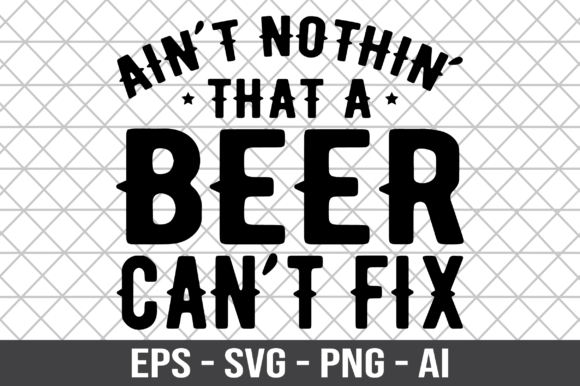
Reviewing Ain t Nothin That a Beer Can t Fix SVG
As a designer who spends half my life digitizing and the other half stitching, I have learned to look past the flashy thumbnails on marketplace listings. We all know the drill: a design looks crisp on a screen, but the moment it hits the fabric, reality sets in. Recently, I downloaded Ain t Nothin That a Beer Can t Fix SVG to test its viability for a client’s casual apparel line. This wasn’t just a quick glance; I needed to know if this graphic could hold up under the needle, survive a wash cycle, and actually sell.
The immediate impression of this file is its bold, unapologetic personality. It fits squarely into the realm of humorous, laid-back Crafts that resonate with a specific demographic. The typography is thick and sturdy, which is a good sign for embroidery. Thin, wispy fonts are the enemy of the sewing machine, often resulting in thread breaks or messy pull-outs. Here, the letterforms have enough weight to support a solid fill stitch or a dense satin stitch border without collapsing into a tangled mess.
From Screen to Stitch: Real-World Application
I decided to test this design on a mid-weight cotton tote bag, a popular item for small shop products. The goal was to create a durable, everyday accessory that didn’t feel cheap. Because Ain t Nothin That a Beer Can t Fix SVG is provided as a vector file, resizing was straightforward. However, scaling up isn’t always better. I kept the design proportional to the bag’s front panel, ensuring it didn’t overwhelm the canvas texture.
When working with Graphics like this, the transition from digital asset to physical object requires careful planning. I used a cut-away stabilizer to prevent puckering, which is crucial when stitching out larger text-based designs. The result was clean. The lines remained sharp, and the humor of the phrase landed well. It wasn’t just a generic quote; it felt like a statement piece. For an Etsy seller or a craft business owner, this kind of distinct visual identity helps products stand out in a saturated market.
Material Matters: Fabric and Thread Choices
The success of any embroidery project hinges on material compatibility. I tested the design on three different surfaces: a structured cap, a soft fleece sweatshirt, and a standard tea towel. On the cap, the curved surface required careful hooping. The design’s compact layout worked well here, avoiding the distortion that often plagues wider graphics on rounded crowns. For the sweatshirt embroidery, the plush texture of the fleece absorbed the stitches nicely, though I had to increase the stitch density slightly to ensure the text didn’t get lost in the pile.
Thread color selection is another critical factor. Since the design relies on readability, high contrast is key. I used a bright white thread on a navy blue shirt, and the pop was immediate. However, on darker fabrics, you must ensure your underlay stitches are sufficient to prevent the background fabric from showing through the top stitches. This is where checking the digital embroidery file settings before hitting "start" saves hours of frustration.
Navigating Limitations and Technical Details
While the design is robust, it is not without its constraints. The phrase includes some tighter kerning between letters. On very small hoop size applications, such as a baby onesie or a small pocket patch, these details might merge. I would advise against using this specific layout for items smaller than four inches unless you simplify the design or remove the finer elements. Tiny lettering is a risk for baby embroidery where durability and safety are paramount.
Additionally, the file package includes AI, EPS, SVG, and transparent PNG formats. This versatility is excellent for printable mockup creation and digital previews, allowing small shop product sellers to showcase their items online before stitching a single thread. However, for the actual embroidery machine, you will need to convert the SVG or use dedicated software to generate the proper stitch file if one is not directly provided. Always verify the license terms for commercial embroidery use. Just because you can download it instantly does not automatically grant unlimited resale rights for the finished physical goods.
Enhancing Brand Value and Customer Trust
Why does a design like Ain t Nothin That a Beer Can t Fix SVG matter for your brand? It comes down to perceived value. A sloppy stitch job ruins even the cleverest joke. Conversely, a crisp, well-executed handmade product builds trust. When customers see consistent quality in your custom apparel or personalized gift items, they return. This design, with its clear lines and bold statement, lends itself well to professional presentation.
For holiday embroidery or gift seasons, this type of humorous graphic appeals to buyers looking for something relatable and fun. It works exceptionally well for embroidered patch creations that can be ironed or sewn onto jackets and bags, extending the life of the garment and adding a layer of customization that mass-produced items lack.
Final Designer Notes
Before you commit to a large batch of production, follow these practical steps:
- Test on scrap fabric: Always run a sample on the exact material you plan to use. Fabric tension varies wildly between brands.
- Check thread contrast: Ensure your thread colors stand out against the fabric background for maximum readability.
- Inspect small details: Zoom in on the vector file to check for any jagged edges or nodes that might cause stitching errors.
- Verify licensing: Confirm whether the license allows for selling finished physical items or if it is for personal use only.
- Use proper stabilizer: Match your stabilizer to your fabric weight to prevent puckering and distortion.
In conclusion, Ain t Nothin That a Beer Can t Fix SVG is a solid addition to a designer’s library. It is not overly complex, making it accessible for beginners, yet it has enough character to satisfy experienced makers. Whether you are creating tote bag design concepts for a local market or expanding your design assets for digital sale, this file offers flexibility and charm. Just respect the technical limits of your machine and materials, and you will produce a finished product that customers appreciate and wear with pride.